
It is March, and in three short months a new class of residents and fellows will complete their medical training. As physicians excitedly complete their training programs, many foreign medical graduates anxiously wait to find out if they will be able to continue their medical careers in the United States.
Foreign medical graduates who complete residency or fellowship training in the United States are obligated to return to their home country for two years as part of a knowledge exchange unless they obtain a coveted waiver of the Immigration and Nationality Act (INA) § 212(e) requirement. Regardless of where a foreign medical graduate may be in their waiver application process, the Immigration Law Group at Bernstein Shur is here to help.
Process Status: You have obtained a J-1 waiver (of the Section 212(e) requirement)
If you already have your I-612 Approval Notice, then you are in great shape to start your new career as a licensed physician in the United States. The I-612 Approval Notice is the documentation issued by U.S. Citizenship and Immigration Services (USCIS) which confirms that you have successfully obtained a waiver of the section 212(e) requirement.
What comes next:
- Apply for H-1B status:
- If you received a Clinical Waiver, you’ll complete your three-year service requirement in H-1B status
- You can typically change status in the US, which helps avoid consular delays
Unlike an H-1B Change of Status, if a physician files a Consular H-1B application, the employer must pay a $100,000 entry fee. Employers may apply for an exception to the fee if the employee’s work is in the national interest, but there has been limited progress in the issuance of these exceptions.
Additionally, when a physician files a Consular H-1B application they must attend an H-1B visa appointment at their local U.S. Embassy or Consulate. With the introduction of increased social media vetting for H-1B visas, some foreign nationals are seeing their visa appointment rescheduled for many months in the future without a viable means of advancing it.
Physicians should work with their employer and immigration attorney to file for their H-1B Change of Status as soon as possible. Recipients of Clinical Waivers are exempt from the H-1B Cap. Therefore, employers can file the H-1B Change of Status as soon as the physician has the I-612 Approval Notice. Even with prompt filing of the H-1B Change of Status, employers should plan on filing the H-1B Change of Status with Premium Processing to ensure timely approval. Physicians need their original H-1B Change of Status Approval Notice in order to complete their I-9 and start work.
Additionally, it is essential that the physician remain in the United States while their H-1B Change of Status is pending to avoid being subject to the $100,000 fee.
Process Status: You have been recommended for a J-1 Waiver
If you have already received an initial recommendation for a waiver of the section 212(e) requirement by an Interested State or Federal Government Agency, then you are still in good shape to start your new career as a licensed physician in the United States.
What to expect:
- With the initial recommendation, your employer and immigration attorney will file a subsequent petition to the Department of State
- Current estimated processing timelines:
- Department of State: ~2 months
- USCIS (final approval): a few additional weeks
After the filing of the initial J-1 Waiver application with the Interested State or Federal Government Agency, there is little for the physician to do themselves. While waiting for the J-1 Waiver application to pass through the various phases of the process, physicians should work on preparing for the H-1B Change of Status petition to facilitate timely filing. As such, physicians should ensure they have a valid passport and actively work to secure an approved medical license in their state of future employment.
Process Status: You have not applied or been selected for a J-1 Waiver
If you have not applied or been selected for a waiver, you are in danger of being unable to start work at the conclusion of your program. However, with quick and deliberate action you can still start your new career as a licensed physician in the United States on time.
Finding waiver opportunities:
- Focus on states with lower application volume in the J-1 Waiver Conrad 30 Program
- Connect with immigration attorneys familiar with state-specific availability
- Look into federal programs or regional commissions, including:
- Southeast Crescent Regional Commission (SCRC)
- Northern Border Regional Commission (NBRC)
- Note: You cannot submit multiple waiver applications at once
If you are still in the process of securing your initial J-1 Waiver application from an Interested State or Federal Government Agency, then obtaining an extension of your DS-2019 can give you an adequate runway to securing your J-1 Waiver and successfully changing to H-1B status. The Educational Commission for Foreign Medical Graduates (ECFMG) often will approve extensions for physicians taking their board exams in late summer or fall. However, these extensions must be requested before the I-612 Approval Notice is issued.
Physicians who have not received a Clinical Waiver may still be able to apply for a personal waiver of the section 212(e) requirement directly with the Department of State on grounds such as persecution or hardship to a U.S. citizen or lawful permanent resident immediate relative. However, these waivers are often not a viable immigration pathway for a physician in their final months of training as they entail lengthy processing times. Additionally, recipients of a personal waiver, such as for persecution or hardship, are statutorily ineligible to change status in the United States, which means the physician’s employer must pay the $100,000 fee for an H-1B visa or reenter the United States in another work authorized status.
An alternative status pathway: The O-1 Visa
One other type of work authorized status is the O-1 visa. The O-1 visa is for foreign nationals with extraordinary ability. For physicians, this is evidenced through achievements such as scholarly articles, awards, memberships, media attention, work as a peer-reviewer, and original contributions in the field of expertise. The O-1 visa is an attractive option for individuals who receive a personal J-1 Waiver because the $100,000 fee does not apply to Consular O-1 petitions. The O-1 visa is also a potential option for individuals unable to obtain a J-1 Waiver because a foreign national can work in the United States in O-1 status without receiving a J-1 Waiver. However, if the physician wants to obtain lawful permanent resident status, they will need to eventually get a waiver of the section 212(e) requirement. Physicians interested in applying for the O-1 visa should start curating their academic work, updating their CV, and identifying experts in their field who would be willing to supply expert letters on their behalf.
The Takeaway: planning your next step
No matter where you are in your J-1 Waiver application process, timing and strategy are critical. Working with experienced immigration counsel—especially those focused on healthcare—can make the difference between a delayed start and a seamless transition into practice.
At Bernstein Shur, our team of immigration attorneys and professionals is ready to help foreign medical graduates and their employers navigate the process of transitioning from trainee to a practicing physician in the United States.
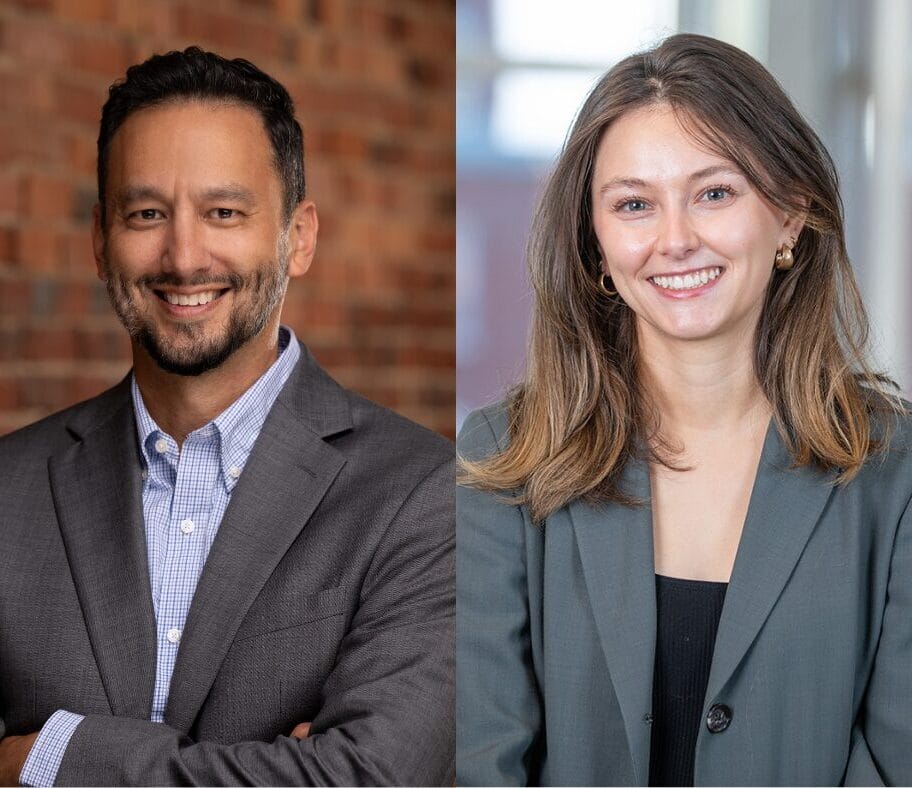
Michael Murray is a shareholder and Chair of the Immigration Law group who advises employers on health care and business immigration strategy, including visa planning, compliance frameworks, and workforce planning to support recruitment, retention, and long-term stability. He can be reached at [email protected].
Olivia Shaw is an associate in the Immigration Law group who advises employers on obtaining temporary work authorization and permanent residence for their employees, with particular experience in health care immigration and business immigration strategies. She can be reached at [email protected].