
On Friday, a federal District Court in Rhode Island vacated three Trump Administration policies that have stalled immigration benefit petitions and asylum applications across the nation. In November and December of last year, United States Citizenship and Immigration Services (“USCIS”) announced policies to “pause” decisions on virtually all petitions filed on behalf of nationals of thirty-nine so-called “Travel Ban” countries.1 These include H-1B work visa petitions, work permit applications, and Green Card applications. The pause has left thousands of immigrants who already reside in the U.S. in doubt, some unable to start new jobs, continue existing jobs, obtain a Green Card, or complete the naturalization process. Under a related policy, all asylum applications have been stalled at the approval stage and, separately, USCIS officers have been ordered to review previously granted immigration benefits to nationals of the “Travel Ban” countries, diverting resources from other case processing lines.
The District Court ordered these policies vacated, effective immediately. The court deemed the policies to be founded in unlawful national origin discrimination and in contravention to existing statutes and regulations. Moreover, the court struck down the policies as “arbitrary and capricious” because USCIS did not properly consider the potentially devastating impacts on individuals, families, and employers.
The District Court stated:
“In ruling on these motions, the Court is reminded of a line often repeated in discussions around immigration policy: If people wish to immigrate to the United States, they ought to ‘follow the law’ and ‘do things the right way.’ This case serves as a perfect example of immigrants doing just that. Plaintiffs and their members have observed the legal processes that Congress enacted by statute and USCIS promulgated by regulation so that they may one day obtain immigration benefits. They have, for example, filed the appropriate paperwork, paid the required filing fees, submitted to the requested biometrics collections, and attended the necessary in-person interviews. Even so, Plaintiffs and their members are stuck waiting, for months on end, for benefit requests that USCIS refuses to adjudicate.
“But the rule of law has to apply to everyone equally and, as evident here, USCIS has neither ‘followed the law’ nor ‘done things the right way.’ Indeed, the agency has violated the very immigration laws that Congress has charged it with administering, as well as the administrative laws that govern the agency’s actions. In enacting its latest immigration policies, USCIS: claims statutory and regulatory authority that it does not possess; makes decisions without the reasoned explanations that it must provide; acts without regard for the reliance interests of applicants that it must consider; and justifies its actions with pretextual concerns of ‘national security’ that mask anti-immigrant sentiments that it is forbidden from letting influence its decision-making. In legal terms that means USCIS’s actions are contrary to law and arbitrary and capricious.
“Accordingly, as set forth below, each of the Challenged Policies that USCIS enacted—the Benefits Hold Policy, the Global Asylum Hold Policy, the Comprehensive Re-Review Policy, and the Country-Specific Factors Policy—are declared unlawful and are vacated and set aside.”
It is unknown when USCIS will implement the judge’s ruling, which is effective immediately. However, this decision may be reviewed by another court, which could prevent USCIS from taking action right away. The decision can be appealed by the government to the Circuit Court of Appeals and its implementation potentially stayed. Absent such a stay, USCIS would be legally bound to resume adjudication of immigration benefit petitions and Asylum applications and cease re-review of previously approved petitions.
Bernstein Shur will monitor the impact of the District Court Decision and will share meaningful updates with our clients.
1 The “Travel Ban” countries include: Angola, Afghanistan, Antigua and Barbuda, Benin, Burma, Burkina Faso, Burundi, Chad, Republic of the Congo, Cote d’ Ivoire, Cuba, Dominica, Equatorial Guinea, Eritrea, Gabon, The Gambia, Haiti, Iran, Laos, Libya, Malawi, Mali, Mauritania, Niger, Nigeria, Senegal, Sierra Leone, Somalia, South Sudan, Sudan, Syria, Tanzania, Togo, Tonga, Turkmenistan, Venezuela, Yemen, Zambia, and Zimbabwe.
Bernstein Shur’s Immigration Law practice group helps employers navigate an increasingly complex immigration landscape through proactive, compliant strategies that support recruitment, retention, and long-term workforce planning. The group advises businesses across industries—particularly in health care and highly regulated sectors—on matters ranging from temporary work visas and employment-based green cards to I-9 compliance and audit preparedness.
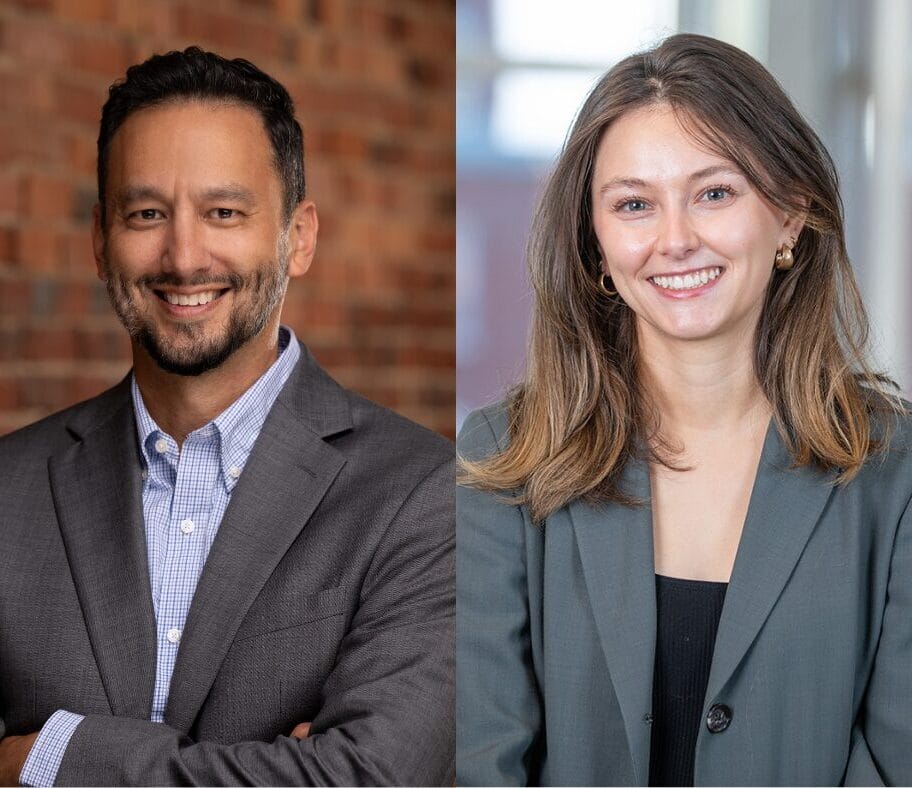
Michael Murray is a shareholder and Chair of the Immigration Law group who advises employers on health care and business immigration strategy, including visa planning, compliance frameworks, and workforce planning to support recruitment, retention, and long-term stability. He can be reached at [email protected].
Olivia Shaw is an associate in the Immigration Law group who advises employers on obtaining temporary work authorization and permanent residence for their employees, with particular experience in health care immigration and business immigration strategies. She can be reached at [email protected].